
Girls exposed to chemicals commonly found in toothpaste, makeup, soap and other personal care products before birth may hit puberty earlier, according to a new longitudinal study led by researchers at the University of California, Berkeley. The results, which were published Dec. 4 in the journal Human Reproduction, came from data collected as part of the […]
Widely used e-cigarette flavoring impairs lung function

A new study has found that a common e-cigarette flavoring that has chemical characteristics similar to toxic chemicals found in cigarette smoke disrupts an important mechanism of the lungs’ antibacterial defense system. “Our data suggest that when used in e-cigarettes cinnamaldehyde, like toxic aldehydes in cigarette smoke, significantly disrupts normal cell physiology in ways that […]
Fukushima’s nuclear stamp found in California wine

The Japanese nuclear disaster bathed north America in a radioactive cloud. Now pharmacologists have found the telltale signature in California wine made at the time. After release into the atmosphere, cesium-137 was swept around the world and found its way into the food supply in trace quantities. Such an addition is rarely welcomed. But in […]
The food we eat could affect our genes

Almost all of our genes may be influenced by the food we eat, according to new research. The study, carried out in yeast – which can be used to model some of the body’s fundamental processes – shows that while the activity of our genes influences our metabolism, the opposite is also true and the […]
Japan to drain radioactive Fukushima water DIRECTLY into the Pacific Ocean

Government authorities in Japan have announced new plans to start dumping highly radioactive wastewater from the failed Fukushima Daiichi nuclear power facility directly into the Pacific Ocean. Though the amount of radiation in the water far exceeds legally-permitted levels, according to the plant’s operator and documents reviewed by the U.K.’s Telegraph, there’s apparently no other place to put […]
Hazelnuts improve older adults’ micronutrient levels

Older adults who added hazelnuts to their diet for a few months significantly improved their levels of two key micronutrients, new research at Oregon State University indicates. In the study, 32 people age 55 and older ate about 57 grams of hazelnuts — 2 ounces or about one-third cup — daily for 16 weeks. Results […]
Curry spice boosts exercise performance in mice with heart failure

New research suggests that curcumin, a main ingredient in curry, may improve exercise intolerance related to heart failure. The study is published ahead of print in the Journal of Applied Physiology. Curcumin, a chemical that comes from the turmeric plant, has been used as a traditional Asian medicine for centuries, primarily to treat gastrointestinal ailments and skin wounds. […]
Do kitchen items shed antimicrobial nanoparticles after use?
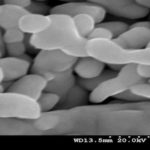
Because of their antimicrobial and antifungal properties, silver nanoparticles measuring between one and 100 nanometers (billionth of a meter) in size, are being incorporated outside the United States into a variety of kitchen products known as food contact materials (FCMs). Among the nanosilver-infused FCMs now on the market overseas are spatulas, baby mugs, storage containers […]
Microplastics detected in humans for the first time

In a pilot study conducted by the Federal Environment Agency and the Medical University of Vienna, microplastics in the human stool was discovered for the first time – in all of the eight international participants. Bettina Liebmann from the Federal Environment Agency and Philipp Schwabl from the Medical University of Vienna have succeeded in proving […]
Just one energy drink may hurt blood vessel function

Young, healthy adults experienced notably diminished blood vessel function soon after consuming one energy drink, according to preliminary research from a small study to be presented in Chicago at the American Heart Association’s Scientific Sessions 2018, a premier global exchange of the latest advances in cardiovascular science for researchers and clinicians. Energy drink consumption has […]