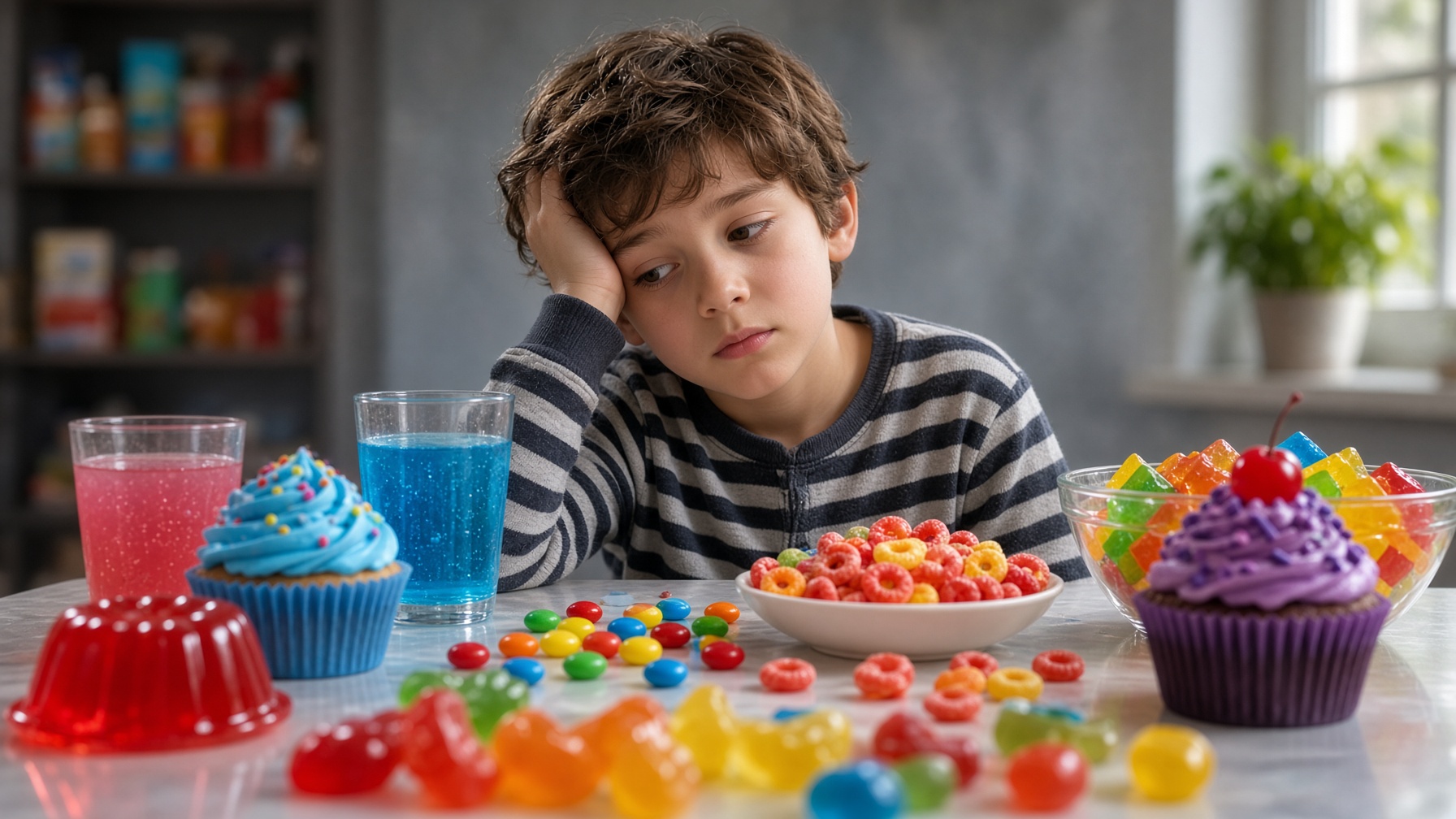
Artificial food dyes have long brightened our snacks, candies, and drinks, but growing evidence raises important questions about their impact on kids. Parents and researchers have wondered for decades whether these synthetic colors contribute to hyperactivity or attention problems. Recent scientific reviews now provide clearer answers based on controlled studies. Understanding this connection helps families make more informed choices about everyday foods.
Concerns about food dyes and behavior first gained attention in the 1970s with the Feingold diet, which eliminated artificial colors and certain additives. Early experiments produced mixed results, leaving the issue unresolved for years. Later, larger and better-designed trials began to reveal consistent patterns. These findings shifted the conversation from anecdote to evidence-based science.
A major 2021 review by California’s Office of Environmental Health Hazard Assessment examined 27 clinical trials involving children. Roughly two-thirds of the studies showed some link between synthetic dyes and behavioral changes. More than half reported statistically significant increases in hyperactivity, restlessness, or inattention. The effects appeared in children both with and without existing diagnoses such as ADHD.
Meta-analyses have quantified these impacts and found small but reliable effect sizes. Parent reports and attention tests often detected the strongest changes after dye challenges. One analysis estimated that about eight percent of children with ADHD may experience worsened symptoms related to food colors. The average effect remains modest compared to medication benefits yet meaningful across large groups of kids.
Sensitivity varies widely among children, with some reacting strongly and others showing little response. Challenge studies that give dyes or placebos in blinded conditions confirm that certain individuals are more vulnerable. Dose appears to matter in some experiments, particularly with dyes like tartrazine. Researchers continue investigating possible biological pathways involving histamine or immune responses.
Regulatory agencies have taken differing approaches based on the same body of evidence. The U.S. FDA acknowledges that some susceptible children may be affected but states no clear causal link exists for the general population. European authorities earlier required warning labels on products containing certain dyes. California has moved further by restricting artificial dyes in school meals after reviewing the research.
Not every study finds an effect, and results can depend on how behavior is measured. Teachers and independent observers sometimes report smaller changes than parents. Study quality, the specific dye mixtures used, and whether children were preselected as potential reactors all influence outcomes. These limitations mean the science remains nuanced rather than absolute.
Artificial dyes are not a primary cause of ADHD or behavioral disorders. Genetics, sleep, overall diet, and environment play far larger roles for most children. Still, for sensitive kids the dyes can act as an aggravating factor. Removing them offers a low-risk step that some families find helpful.
Parents who notice behavioral shifts after colorful snacks or drinks may consider a short elimination trial under guidance from a pediatrician. Reading labels carefully reveals dyes in unexpected places beyond candy, such as cereals and yogurts. Natural color alternatives from fruits and vegetables provide brighter options without synthetic additives. Small dietary adjustments can support better focus and calmer days for some children.
The evidence shows that synthetic food dyes can influence behavior in a subset of kids, even if effects are modest on average. Ongoing research and regulatory attention keep refining our understanding of safe exposure levels. Families now have stronger information to weigh the benefits of vibrant foods against potential downsides. Awareness remains the first step toward healthier choices that support children’s well-being.
Organic foods stand out as one of the strongest alternatives because certification standards strictly prohibit synthetic dyes and many artificial additives. Farmers and processors must rely on natural coloring agents derived from fruits, vegetables, spices, and other plant sources instead of petroleum-based chemicals. This approach eliminates the very compounds linked to increased hyperactivity and attention issues in sensitive children. Choosing organic therefore offers a straightforward way to reduce exposure without needing to scrutinize every label for specific dye names.
Beyond simply avoiding artificial colors, organic options often feature fewer overall processed ingredients and a greater emphasis on whole foods. Children who switch to organic versions of snacks, cereals, and drinks typically consume more nutrient-dense items that support steady energy and better focus. Studies and parental reports frequently note calmer behavior once synthetic dyes are removed through an organic-focused diet. For families concerned about the behavioral effects of food dyes, organic choices provide both peace of mind and a practical path toward healthier eating habits.
Here are practical non-book product suggestions available on Amazon focused on natural food coloring alternatives and dye-free options:
Popular Natural Food Coloring Sets
- Watkins Assorted Food Coloring (Red, Yellow, Green, Blue) — Plant-based liquids derived from beet juice, turmeric, and spirulina. FD&C dye-free, non-GMO, and gluten-free. A longtime favorite for baking and frosting.
- 365 by Whole Foods Market Plant-Based Food Coloring — Affordable set of red, yellow, green, and blue liquids made from natural sources. Gluten-free and widely available.
- India Tree Nature’s Colors Decorating Set — Liquid colors from plant ingredients (often including beet, turmeric, and spirulina). Clean and suitable for cake decorating.
- Color Kitchen Natural Food Coloring Powders — Plant-based powder packets (vibrant packs or rainbow sets). Dye-free, vegan, and good for frostings, batters, and drinks.
Individual Natural Powders & Specialty Options
- Suncore Foods Organic Powders (e.g., Red Beet, Blue Butterfly Pea, Blue Spirulina) — Single-ingredient organic powders that double as natural colorants and superfoods. Excellent for smoothies, baking, and intense hues.
- Pixie Dust All-Natural Food Coloring Powder Sets — Flavorless, plant-based powders in multiple colors (red, yellow, blue, green, etc.). Kosher and designed specifically for cake decorating without artificial dyes.
- Pure powders such as USDA Organic Blue Spirulina Powder or Purple Sweet Potato/Ube Powder — Versatile for blue/purple tones in drinks, ice cream, or baked goods.
These products are commonly stocked and highly rated for replacing synthetic dyes in home baking, frosting, Easter eggs, and crafts. Search the exact product names on Amazon for current prices, reviews, and availability (they can fluctuate). Many are also available in multipacks or organic versions.
Mobile Apps for Checking Ingredients
These help scan barcodes or ingredient lists to identify artificial dyes (Red 40, Yellow 5, etc.):
- Food Scanner: Additive Checker
- CleanLabel (AI label scanner)
- Ingredient Guard
- Yuka or GreenChoice (broader clean-eating scanners that flag dyes)
 Atomic Homefront: The Hidden Nuclear Legacy Threatening St. Louis Suburbs
 The Sugar Shield: How Early-Life Rationing Built a Generation with Lower Cancer Risk
 Don’t Drink the Water: The Glass Half Empty Reality of Invisible Contaminants
 Why Ultra-Processed Foods Are the Real Silent Killer – And How Big Food + Government Guidelines Have Been Lying to You for Decades