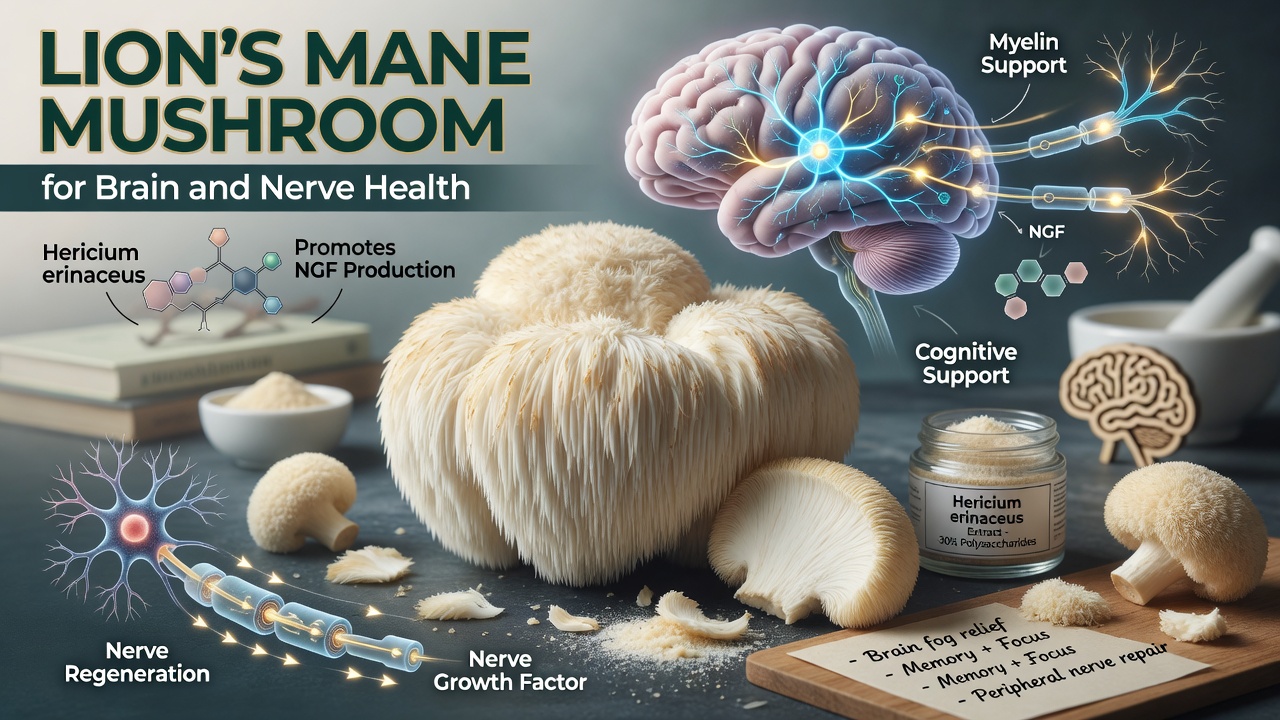
In an era where neurological conditions cast long shadows over millions of lives, one natural wonder stands out for its intriguing promise: Lion’s Mane mushroom, known scientifically as Hericium erinaceus. This distinctive, shaggy fungus, resembling a cascading white mane, has captured the attention of researchers and health enthusiasts alike. Affecting approximately 6 million Americans, Alzheimer’s disease progressively erodes memory and cognitive function, while mild cognitive impairment impacts 12 to 18 percent of those over 60. Meanwhile, diabetic neuropathy brings pain, numbness, and tingling to the extremities of 60 to 70 percent of people with diabetes. Lion’s Mane offers a beacon of hope through its unique ability to support nerve growth and repair.
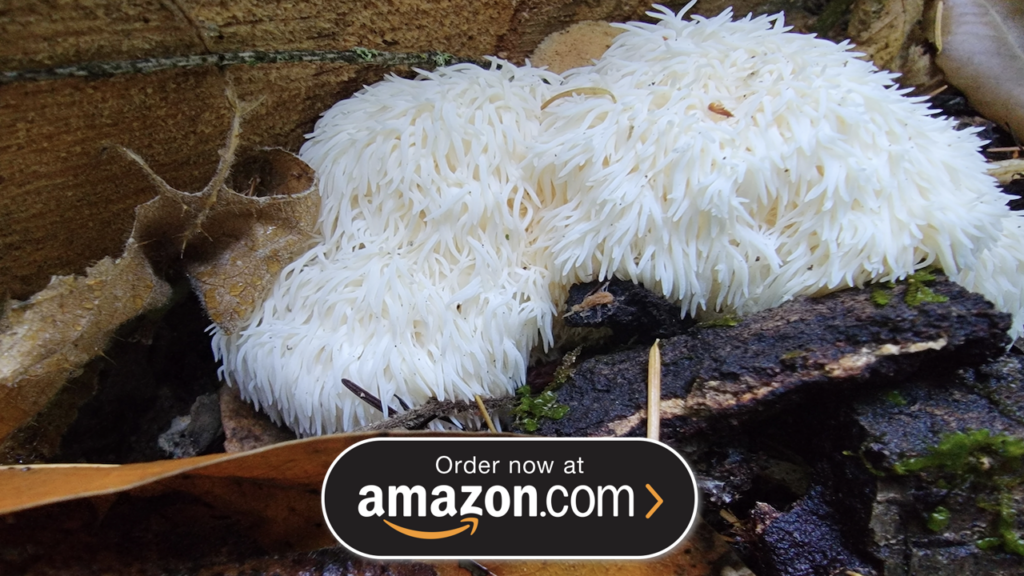
Lion’s Mane has been revered in traditional Asian medicine for centuries as both a culinary delicacy and a medicinal treasure. Its mild, seafood-like flavor makes it a versatile addition to dishes, but its true power lies in its bioactive compounds. Modern science is now validating what ancient practitioners intuited: this mushroom may nurture the nervous system in profound ways. As populations age and chronic conditions like diabetes rise, exploring such natural allies becomes increasingly vital for holistic brain and nerve support.
At the heart of Lion’s Mane’s effects are two families of compounds: hericenones, primarily in the fruiting body, and erinacines, abundant in the mycelium. These small-molecular-weight diterpenoids and meroterpenoids can stimulate the production of nerve growth factor (NGF), a protein essential for neuron survival, growth, and maintenance. Unlike pharmaceutical NGF, which is too large to cross the blood-brain barrier, these mushroom compounds are small enough to potentially reach brain tissue directly.
Erinacines A, B, and C have shown particular potency in preclinical studies. They appear to cross the blood-brain barrier via passive diffusion and encourage NGF synthesis in hippocampal astrocytes. This mechanism supports neuroplasticity—the brain’s ability to form new connections—offering a natural pathway for cognitive resilience. Hericenones complement this action, creating a multifaceted approach to neural health.
A landmark 2009 double-blind, placebo-controlled trial published in Phytotherapy Research involved older adults with mild cognitive impairment. Participants taking Lion’s Mane powder (about 3 grams daily) for 16 weeks demonstrated significant improvements in cognitive scores on the Revised Hasegawa Dementia Scale compared to placebo. Impressively, benefits appeared at weeks 8, 12, and 16, but scores tended to decline after a 4-week washout period, suggesting the effects are use-dependent and tied to ongoing NGF support.
Further research with erinacine-enriched mycelia in patients with early Alzheimer’s has shown encouraging results. In small trials, improvements were noted in some cognitive measures, activities of daily living, and even visual processing. While not all endpoints reached statistical significance in every study—due partly to modest sample sizes—the pattern points toward meaningful supportive benefits rather than dramatic reversal.
Animal models paint an even more vivid picture of Lion’s Mane’s neuroprotective prowess. Studies demonstrate reduced amyloid-beta plaques, decreased neuroinflammation, enhanced hippocampal neurogenesis, and better memory performance in models of Alzheimer’s. These findings align with the mushroom’s NGF-stimulating properties, suggesting it may help create a more supportive environment for aging neurons.
Beyond the brain, Lion’s Mane shows remarkable potential for peripheral nerve repair. In rat models of sciatic nerve crush injury, aqueous extracts accelerated regeneration, improved functional recovery (such as walking and toe spreading), and enhanced Schwann cell activity—the cells crucial for myelinating and repairing peripheral nerves.
Research published in journals like the Journal of Traditional and Complementary Medicine and related works highlights faster sensory and motor recovery. Treated animals often regained function days or weeks earlier than controls. These effects involve not only NGF but also anti-inflammatory pathways and support for the blood-nerve barrier.
For the millions suffering from diabetic neuropathy, this peripheral repair mechanism holds special relevance. Chronic high blood sugar damages nerves, leading to persistent discomfort and reduced quality of life. While human trials specifically for diabetic neuropathy remain limited, the preclinical data on nerve regeneration offers a compelling rationale for further investigation as a complementary approach.
Lion’s Mane also exhibits broader anti-inflammatory and antioxidant properties. These help combat oxidative stress and chronic low-grade inflammation—two culprits heavily implicated in both neurodegenerative diseases and neuropathy progression. By modulating these underlying processes, the mushroom may offer multi-system support for long-term neurological wellness.
Emerging studies explore additional benefits, including potential mood enhancement and stress reduction. Some trials in younger adults noted quicker performance on certain cognitive tasks and improved subjective well-being after supplementation. These effects may stem from better sleep quality, reduced perceived stress, or direct neurotrophic support in mood-regulating brain regions. Safety profiles across studies remain reassuring. Lion’s Mane is generally well-tolerated, with mild gastrointestinal discomfort as the most common reported side effect at typical doses. Traditional use as a food mushroom further supports its gentle nature for most people. As with any supplement, consulting a healthcare provider is wise, especially for those on medications or with specific health conditions.
Typical dosages in research range from 1 to 3 grams per day of powder or equivalent extracts, often standardized for key compounds. Quality matters greatly—look for products tested for erinacine or hericenone content, ideally from reputable sources using both mycelium and fruiting body where possible. Consistency appears key, as benefits often build over weeks to months.
Incorporating Lion’s Mane into daily life can be delightful. Fresh or dried mushrooms can be sautéed, brewed into tea, or added to soups and stir-fries. For those preferring convenience, capsules and tinctures provide concentrated support. Pairing it with a brain-healthy lifestyle—rich in exercise, quality sleep, social engagement, and a Mediterranean-style diet—may amplify its potential.
While Lion’s Mane is not a miracle cure or replacement for conventional medical care, it represents an exciting area of natural neuroscience. Larger, longer-term human trials are underway and needed to fully map its benefits. Current evidence positions it as a promising adjunct for supporting cognitive function in mild impairment and aiding nerve health.
The story of Lion’s Mane reminds us that nature often provides sophisticated solutions refined over eons. Its compounds work in harmony with our biology, encouraging the body’s own repair mechanisms rather than overriding them. This gentle, regenerative approach appeals to those seeking integrative strategies for healthy aging.
As research continues to unfold, Lion’s Mane may play a growing role in comprehensive neurological wellness plans. From the hippocampus to peripheral nerves, its influence touches critical aspects of nervous system vitality. For individuals facing cognitive concerns or neuropathic challenges, it offers a natural complement worth thoughtful consideration under medical guidance.
Ultimately, the most powerful strategy combines evidence-based medicine, lifestyle optimization, and carefully selected natural supports. Lion’s Mane exemplifies the bridge between traditional wisdom and modern validation. Its legacy as a “natural food for the neurons” continues to inspire hope and scientific curiosity.
In embracing such botanical allies, we honor the intricate resilience of the human nervous system while pursuing proactive paths to better brain and nerve health. The future of neurological support may well include this extraordinary mushroom as part of a multifaceted approach to thriving in later years.
Excellent In-Depth Scientific Review
“I read every Clinical Study on Lion’s Mane & Brain Function: Does it Work?”
Link: https://www.youtube.com/watch?v=-XnHgRVOov0 The creator systematically goes through all available human clinical trials on cognition and brain function. Very transparent about what the evidence actually shows versus what’s overhyped. Great for a detailed, study-by-study breakdown.
Engaging Deep Dive into the Science
“The Mind-Bending Science Behind Lion’s Mane Mushrooms” by North Spore
Link: https://www.youtube.com/watch?v=w_7Q_H_k98o A well-produced video covering history, erinacines/hericenones, NGF stimulation, blood-brain barrier crossing, Alzheimer’s/memory research, and nerve regeneration. Informative and visually appealing.
Here are the best Lion’s Mane supplements on Amazon right now (as of 2026), based on quality, purity, reviews, and alignment with the neurological benefits we’ve discussed (NGF support, fruiting body vs. mycelium, erinacines/hericenones).
Top Recommendations
- Real Mushrooms Lion’s Mane (Best Overall for Purity)
- Why it’s great: 100% fruiting body extract (no mycelium-on-grain fillers), organic, high beta-glucan content, third-party tested. Excellent reputation for quality and transparency.
- Available in capsules (e.g., 120 count) and powder.
- Ideal if you want a clean, single-ingredient product focused on brain and nerve support.
- Highly recommended for serious users.
- Double Wood Supplements Lion’s Mane (Best Value / Best Seller)
- Very popular on Amazon with tens of thousands of reviews.
- Organic, third-party tested, grown in the USA, good potency (typically 1,000mg+ per serving).
- Affordable and reliable for daily use. Great entry point if you want something effective without spending top dollar.
- Nootropics Depot Lion’s Mane (Best for Potency / Extract Quality)
- Offers both fruiting body dual extracts (hot water + alcohol) and specialized mycelium products standardized for erinacine A.
- Lab-tested with high transparency — favored by nootropic enthusiasts.
- Excellent if you want maximum bioactive compounds for cognitive and nerve regeneration support.
Other Strong Contenders
- Nutricost Organic Lion’s Mane — Budget-friendly organic option, available in powder or capsules.
- Host Defense (Paul Stamets) — Trusted brand, organic, but often mycelium-based (good for general use, less ideal for maximum erinacines/hericenones).
- Bold Botanica or premium dual-extract brands — Strong for high-potency fruiting body extracts.
Quick Buying Tips for Best Results
- Prioritize fruiting body extracts or dual extracts (fruiting body + mycelium) for hericenones and erinacines.
- Look for third-party testing, beta-glucan percentage (ideally 25%+), and “no grain/fillers” claims.
- For brain/nerve benefits: Aim for 1,000–3,000mg daily (as used in studies).
- Check recent reviews and Certificate of Analysis (CoA) on the brand’s site.
My #1 pick for you: Real Mushrooms Lion’s Mane — it best matches the science-focused discussion we’ve had about high-quality, effective supplementation.
 The Sweetener Stealthily Sabotaging Your Brain: How Erythritol May Raise Stroke Risk
 Unlocking the Potential of Black Seed Oil: A Natural Ally for Metabolic and Nerve Health in Diabetes Management
 Mushrooms magnify memory by boosting nerve growth
 Kombucha to kimchi: Which fermented foods are best for your brain?