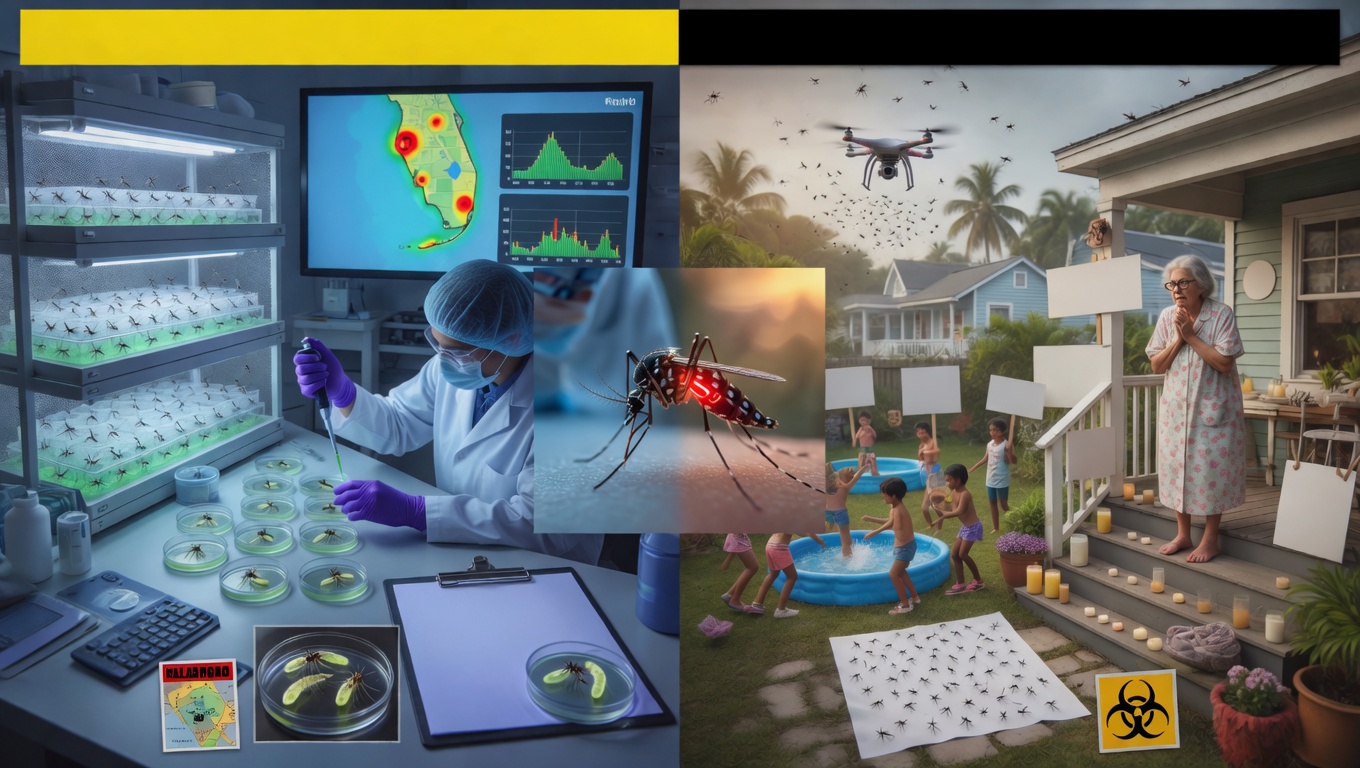
Google’s Verily Debug project has applied for EPA approval to release up to 32 million lab-reared male mosquitoes in parts of California and Florida. The plan involves two years of releases with 16 million males per year per state across up to 800 acres each. These mosquitoes carry the naturally occurring bacterium Wolbachia pipientis. The goal is to suppress populations of disease-carrying species like Aedes albopictus and Culex quinquefasciatus.
The technique relies on cytoplasmic incompatibility caused by Wolbachia. When infected lab males mate with wild females, the resulting eggs fail to hatch. This reduces the next generation of biting mosquitoes without using chemical insecticides. Only males are released because they do not bite humans or transmit diseases. Advanced AI and robotics help ensure highly accurate sex-sorting to minimize any female releases.
Verily’s earlier trials in Fresno, California, demonstrated strong results. In 2018, releases of millions of Wolbachia-infected males achieved up to 95% suppression of wild female Aedes aegypti mosquitoes during peak season. Earlier years showed reductions around 68% to 84% depending on conditions and scale. These outcomes suggest the method can effectively lower local mosquito densities in residential areas.
Similar Wolbachia approaches have succeeded internationally. Population suppression and replacement programs have cut dengue incidence by 70-77% or more in places like Singapore, Indonesia, and Colombia. The World Mosquito Program releases tens of millions of Wolbachia mosquitoes weekly in partnership with various countries. These efforts target viruses including dengue, Zika, chikungunya, and yellow fever.
The Bill & Melinda Gates Foundation has funded the World Mosquito Program extensively in the past. In March 2025, Verily’s Debug partnered with WMP to provide robotics, AI sex-sorting, and release technology for global scaling. Fact-checkers note Gates does not directly fund this specific U.S. EPA application. However, the shared technology and goals have fueled public debate and skepticism.
Critics, including some Republican lawmakers, question the long-term ecological impacts. Potential effects on food chains involving bats, birds, and fish remain under discussion. Uncertainty exists around evolutionary resistance or unintended spread of Wolbachia. Opponents label it an untested Big Tech experiment on American communities and call for more independent review.
Supporters highlight that Wolbachia occurs naturally in up to 40-60% of insect species. It does not infect mammals and poses negligible risk to humans according to multiple risk assessments. The approach avoids broad-spectrum pesticides that harm non-target insects and cause resistance. Mosquito-borne diseases continue to pose real threats in warming climates with expanding vector ranges.
The EPA received the experimental use permit application from Google LLC on behalf of Verily. Public comments are being accepted until June 5, 2026, before a final decision. State agencies in California and Florida must also approve any field testing. No releases can occur without these permits under the Federal Insecticide, Fungicide, and Rodenticide Act.
This proposal represents one of the largest planned Wolbachia suppression releases in U.S. history. Previous U.S. trials by Verily and partners were smaller in scale. The current application seeks data for potential full registration. It targets both nuisance and disease-vector mosquitoes in two populous states.
Environmental groups and residents have submitted comments expressing caution. Some demand community consent and broader National Academies review. Others worry about corporate influence in public health interventions. Proponents argue that inaction allows continued reliance on less effective or more harmful controls.
Wolbachia-based methods differ from genetically modified mosquito approaches like Oxitec’s. This uses a natural bacterium rather than gene drives or self-limiting genes. Males are incompatible rather than sterile through radiation in some combined strategies. The distinction matters for regulatory classification and public perception.
Success depends on release timing, density, and isolation of treatment areas. Fresno trials showed better results when starting early in the season. Migration from untreated zones can reduce overall impact. Sustained releases may be needed until local populations crash significantly.
Global climate change expands mosquito habitats and disease risks. Traditional insecticides face growing resistance and environmental costs. Biotech alternatives like Wolbachia offer precision targeting. Yet scaling from trials to widespread use requires careful monitoring of efficacy and safety.
Public trust remains a key challenge for these programs. Conspiracy narratives linking the effort to depopulation or control have circulated widely. Scientific consensus supports the safety and potential benefits for disease reduction. Transparent data sharing and independent oversight can address legitimate concerns.
The EPA and Verily emphasize that males do not bite and Wolbachia-infected releases aim only at suppression. Past programs showed no significant adverse effects on non-target species. Continued research will track any long-term ecosystem changes. Adaptive management can adjust strategies based on field data.
This initiative reflects broader innovation in vector control. Alphabet’s Verily combines Silicon Valley tech with entomology for automated rearing and release. Partnerships with public health agencies could integrate these tools into integrated pest management. The coming decision will influence future applications of similar technologies.
Americans have until June 5 to review the docket and submit comments to the EPA. Engaging with evidence-based facts rather than headlines can shape responsible oversight. Balancing innovation against precaution defines progress in public health. The mosquito experiment tests society’s readiness for precision biology in everyday environments.
“Protect your family while Big Tech experiments with mosquitoes — stock up on proven repellents, traps, and barriers.”
These products are currently best-sellers in the Insect & Pest Repellent category. Focus on practical protection and peace of mind.
1. Best Overall Seller: Sawyer Products Permethrin Insect Repellent
- Why it fits: Treat your own clothes, gear, and backyard items for long-lasting mosquito protection — a practical response if you’re concerned about increased mosquito activity or want chemical-free alternatives to lab experiments.
- Highly rated for effectiveness against mosquitoes, ticks, and other insects. Lasts through multiple washes.
2. Picaridin or Lemon Eucalyptus Repellent Spray
- Top options: Sawyer Picaridin, OFF! Clean Feel with Picaridin, or Murphy’s Naturals / Repel Lemon Eucalyptus (DEET-free).
- Why relevant: People in Florida and California may stock up on personal repellents amid the news. Picaridin is one of the most recommended EPA-registered alternatives.
- Great for everyday backyard use.
3. DynaTrap or Similar Outdoor Mosquito Trap
- Popular model: DynaTrap 1/2 Acre or 1 Acre Mosquito & Flying Insect Trap.
- Attracts and kills mosquitoes using UV light, fan, and sticky glue — a proactive “fight back” tool for homeowners worried about local populations.
- Good for patios and yards in the release zones.
4. Mosquito Netting or Pop-Up Mosquito Tent
- Best sellers: Pop-up foldable mosquito nets for beds, camping, or patio use + full mosquito netting fabric.
- Why it fits: Provides physical barrier protection, especially for families with kids or people skeptical of the biotech releases.
- Very practical for camping or sleeping with windows open in affected areas.
5. Insect-Repellent Clothing (Permethrin-Treated)
- Brands like Insect Shield or treated shirts/pants.
- Why relevant: Long-term wearable protection that aligns with concerns about “backyard experiments” and outdoor time in Florida/California.
Bonus Ideas:
- Citronella candles or outdoor patio repellent bundles.
- Bug zappers (electric mosquito zappers).
- Scientific books like Wolbachia: Methods and Protocols (for those wanting to understand the science behind the experiment).
 The Pink Pineapple and the GMO Illusion: Why Corporate Self-Testing Should Alarm Every Organic Advocate
 Snap! Crackle! Pop! Electric bug zappers are useless for controlling mosquitoes
 Insecticides from genetically modified corn are present in adjacent streams
 STUDY FIRST TO LINK WEED KILLER ROUNDUP® TO CONVULSIONS IN ANIMALS