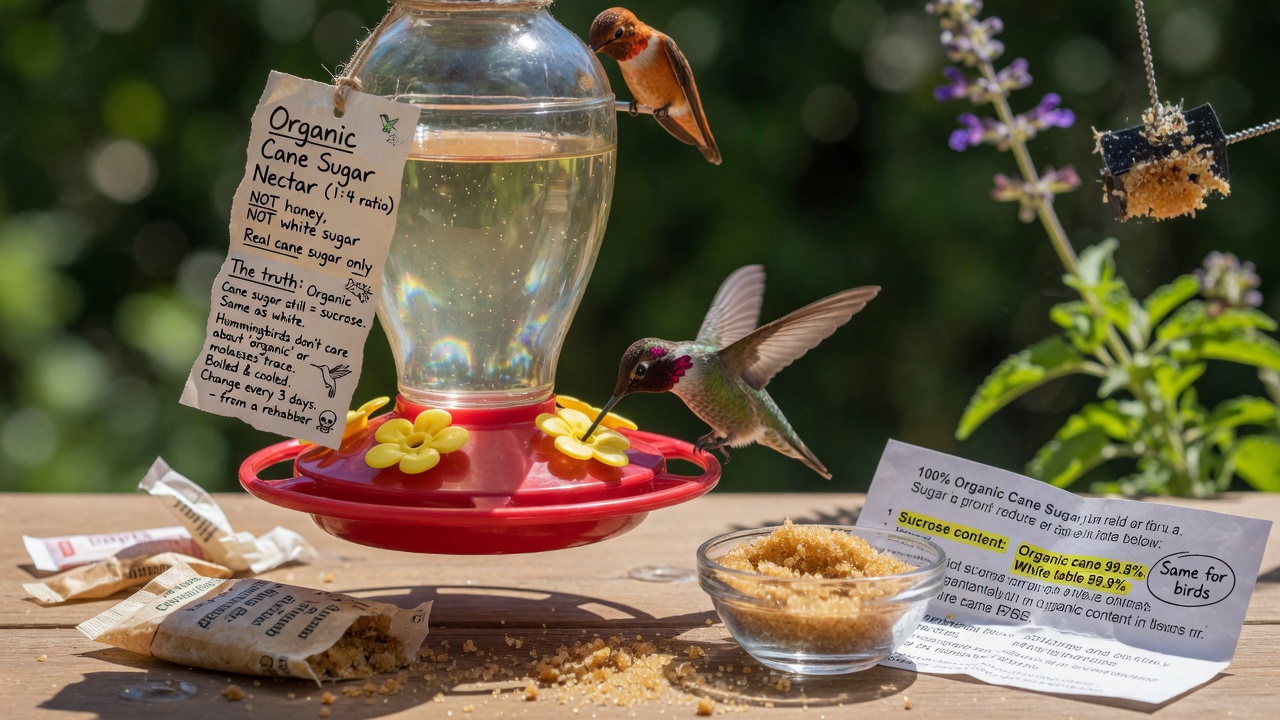
Organic cane sugar has gained popularity among health-conscious consumers for its perceived natural qualities. Many backyard bird enthusiasts wonder if it makes a better choice for hummingbird feeders than ordinary white sugar. However, experts strongly caution against using it for these tiny birds. The differences in processing make organic cane sugar potentially harmful despite its wholesome image.
Standard white granulated sugar undergoes extensive refining that removes nearly all molasses and impurities. Organic cane sugar, by contrast, is minimally processed to preserve its organic certification. This leaves behind trace amounts of molasses that give the crystals a light brownish or golden tint. These remaining components introduce minerals that white sugar simply does not contain.
Molasses is the thick syrup byproduct of sugar production rich in various minerals. Iron stands out as particularly concerning among these minerals for hummingbird health. Hummingbirds have a specialized metabolism that does not handle excess iron efficiently. Even small daily amounts from feeder nectar can accumulate over time in their bodies.
Iron storage disease, also known as hemochromatosis, poses a serious risk to hummingbirds. This condition causes iron to build up in vital organs like the liver. Affected birds may experience organ damage and reduced lifespan. Prevention through proper diet remains the best approach since treatment options for wild hummingbirds are limited.
Reputable organizations including the Hummingbird Society and Audubon Society recommend only pure white refined sugar. They advise against brown sugar, raw sugar, and organic cane sugar for nectar. The consensus stems from both laboratory analysis and field observations of feeder visitors. Using the wrong sugar type can unintentionally harm the very birds people aim to help.
The safe standard recipe calls for one part white granulated sugar dissolved in four parts water. This mixture closely mimics the natural sucrose content of flower nectar. No additional ingredients like honey, molasses, or dyes should ever be added. Boiling the mixture helps dissolve the sugar fully and slows bacterial growth.
Many people assume organic products are always superior for wildlife. This belief does not hold true when it comes to hummingbird nutrition. Hummingbirds evolved to consume nectar from flowers that contains primarily simple sugars and water. They lack the physiological adaptations needed to process the complex compounds found in molasses.
Commercial organic cane sugar varies widely in its molasses content. Some brands appear quite light while others show noticeable tan coloring. Even slight discoloration signals the presence of unwanted minerals. Checking the appearance provides a simple visual test before purchasing.
Beet sugar and cane sugar both work equally well when fully refined to pure white. The source plant matters far less than the refining process. Pure sucrose serves as the critical component that hummingbirds can safely metabolize. Any deviation from this purity introduces unnecessary risks.
Hummingbirds visit feeders multiple times per hour throughout the day. This frequent consumption multiplies the effects of any harmful ingredients. What seems like a tiny amount of iron per sip becomes significant over weeks and months. Consistency in using safe sugar protects the birds during their entire season of visitation.
Some manufacturers market specialty sugars labeled as suitable for hummingbirds. Consumers should verify these claims carefully against expert guidelines. Truly safe options remain plain white cane or beet sugar without additives. Marketing terms like “natural” or “organic” do not guarantee safety for nectar.
Red dye in hummingbird nectar has also fallen out of favor with experts. The same principle applies to avoiding unnecessary additives of any kind. Clean feeders filled with fresh clear nectar support better bird health. Simple practices yield the best results for attracting and sustaining hummingbird populations.
Wild hummingbirds obtain trace minerals naturally through their varied diet of insects and spiders. These protein sources provide balanced nutrition without excess iron. Feeders should supplement rather than replace this natural foraging behavior. Offering pure sugar water respects their evolutionary adaptations.
Climate and seasonal changes affect how quickly nectar spoils in feeders. Hot weather demands more frequent cleaning and replacement of the solution. Using safe white sugar reduces additional complications from mineral deposits. Proper maintenance complements the choice of correct ingredients.
Beginners sometimes experiment with different sugars based on internet advice. Reliable sources from ornithological groups provide the most trustworthy information available. Peer-reviewed studies and long-term observations support the white sugar recommendation. Following evidence-based practices helps newcomers succeed in hummingbird care.
Conservation efforts focus on creating safe environments for declining hummingbird species. Every backyard feeder can contribute positively when managed correctly. Choosing appropriate sugar represents one small but meaningful action. Collective efforts from many individuals create larger positive impacts.
Education about proper nectar preparation spreads through garden clubs and nature centers. Sharing accurate information helps counter persistent myths about organic alternatives. Clear explanations of the molasses and iron issue prove most effective. Informed communities make better decisions for local wildlife.
Future research may explore additional aspects of hummingbird nutrition and metabolism. Current knowledge already provides clear practical guidelines for feeders. Sticking to proven methods offers the safest approach in the meantime. Patience and observation allow enthusiasts to enjoy healthy hummingbird visitors.
Hummingbirds play vital roles in pollination and ecosystem balance. Protecting their health through responsible feeding supports broader environmental goals. Small choices in sugar selection contribute to these larger outcomes. Thoughtful actions reflect genuine care for these remarkable birds.
In conclusion, organic cane sugar is not suitable for hummingbird nectar due to its molasses content. The traces of iron and other minerals present genuine health risks over time. Pure white refined sugar remains the gold standard for safe feeding. By following these guidelines, backyard enthusiasts can provide reliable support for hummingbirds throughout the seasons.

 The Sugar Shield: How Early-Life Rationing Built a Generation with Lower Cancer Risk
 The 10-Minute Habit That Science Says Beats Sitting After Meals
 WHO advises not to use non-sugar sweeteners for weight control
 Non-nutritive sweeteners affect human microbiomes and can alter glycemic responses