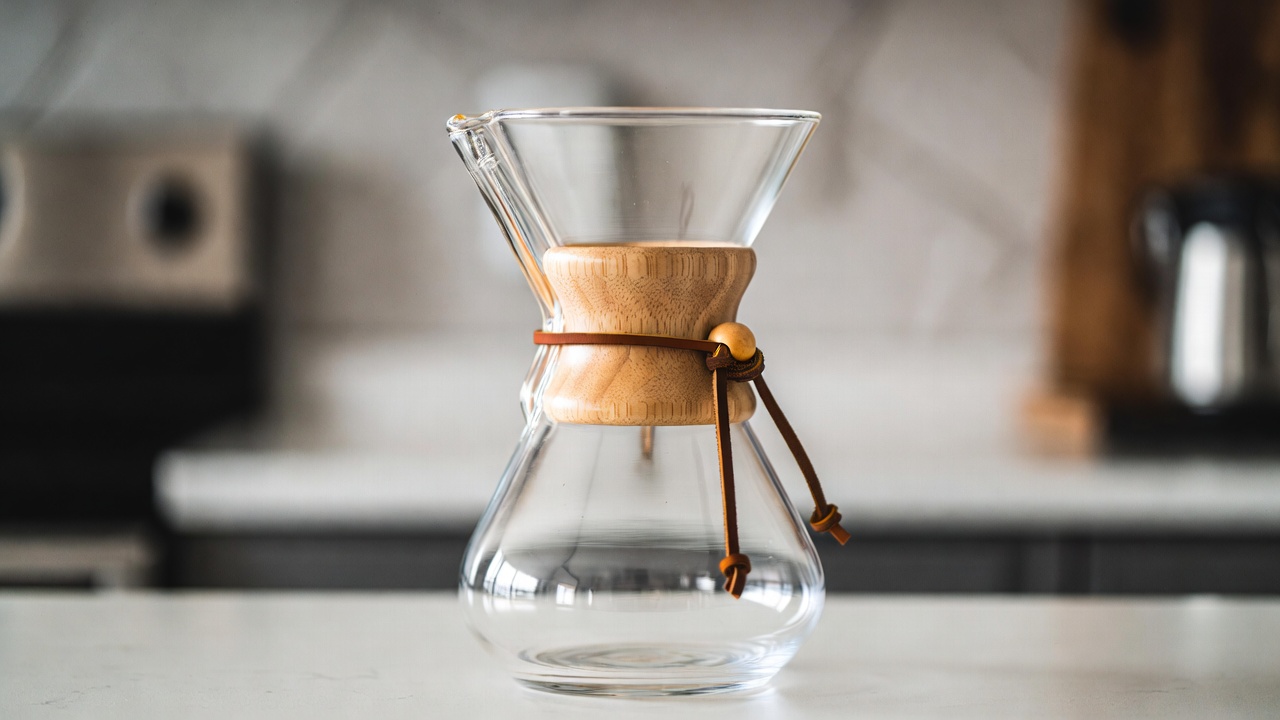
If you’re still brewing coffee with an automatic drip machine, a pod system like a Keurig, or even a basic French press, it’s time to make the switch. The Chemex Classic Coffee Maker delivers a noticeably superior cup—one that’s cleaner, brighter, more flavorful, and genuinely satisfying—while turning your daily routine into something elegant, mindful, and cost-effective. Invented in 1941 by German-born chemist Peter Schlumbohm, its iconic hourglass-shaped borosilicate glass design (the same non-porous, lab-grade material used in scientific glassware) has earned a permanent spot in the Museum of Modern Art’s collection. Paired with its polished wooden collar and leather tie, the Chemex isn’t just a coffee maker—it’s beautiful enough to leave on your counter as kitchen art instead of hiding it in a cabinet like most appliances.
But the real reason thousands keep switching isn’t the looks. It’s the dramatically better coffee.
Why the Chemex Produces Superior Coffee
Everyday brewing methods quietly compromise flavor in different ways. Automatic drip machines often over-extract or brew inconsistently because of uneven water flow and temperature fluctuations. French presses let through oils and fine sediments for a heavy body, but they leave grit in your cup and can taste muddy or bitter. Pod systems prioritize speed over quality, using pre-ground coffee and high-pressure extraction that frequently results in flat, overly acidic, or one-dimensional cups.
The Chemex fixes all of that with its proprietary bonded paper filters—thicker and scientifically engineered to trap oils, fine particles, bitter compounds, and sediments that other methods let through. What you get is a remarkably clean, bright, and aromatic brew: balanced natural sweetness, vibrant fruit or floral notes (especially in light-to-medium roasts), and zero harsh bitterness or off-flavors. Coffee lovers consistently describe it as “velvety,” “juicy,” “smooth,” or even “tea-like” in its clarity while still feeling full-bodied and satisfying.
Compared with other popular pour-over brewers, the Chemex stands out for purity:
- The Hario V60 gives bolder, more intense flavors but lets more oils through.
- The Kalita Wave offers even extraction but a flatter overall profile.
The Chemex excels at letting the bean’s true character shine—clean, nuanced, and barista-quality at home.
The Hidden Downsides of Pod Systems (Like Keurig) – And Why They’re Costly in More Ways Than One
Convenience is seductive, but pod brewers come with serious long-term downsides that add up fast.
Exploding costs. A single K-Cup or similar pod usually costs $0.50–$0.80 (sometimes more for premium or specialty varieties). If you drink just two to three cups a day, you’re looking at $300–$700+ per year on pods alone. Over five years, that’s $1,500–$3,500 or more—money that could have gone toward better beans or literally anything else. In contrast, brewing with the Chemex using quality whole beans or pre-ground coffee costs just $0.20–$0.40 per cup. One Chemex lasts decades; pod machines often need replacement parts or full replacement every few years. The savings are immediate and compound over time.
Massive environmental waste. Billions of K-Cups end up in landfills every year—enough plastic to circle the Earth multiple times if laid end to end. Even the “recyclable” versions (made from #5 polypropylene) are rejected by most municipal recycling programs because they’re too small and contaminated with coffee residue. These pods take hundreds or thousands of years to break down and contribute to plastic pollution in oceans and ecosystems. The Chemex uses simple paper filters that are fully compostable (or you can switch to a reusable metal filter for zero waste). Your daily brew leaves virtually no long-term trash behind.
Health and maintenance headaches. Pods can leach microplastics or packaging flavors into your coffee, and the machines themselves become breeding grounds for bacteria and mold in their reservoirs and internal tubes if not cleaned religiously. Automatic drip makers suffer the same problem—warm, moist reservoirs are perfect for growth. Multiple studies and consumer tests have shown that neglected coffee makers often contain yeast, mold, and even coliform bacteria (sometimes more germs than a typical bathroom faucet handle). That buildup doesn’t just taste musty; it can pose risks for anyone with sensitivities. Cleaning requires repeated vinegar runs, descaling tablets, and disassembly—yet most people skip or forget it.
The Chemex eliminates every one of these issues. Its borosilicate glass has no hidden tubes, reservoirs, or electronics to harbor grime. Cleanup is effortless: rinse (or dishwasher if you prefer), toss or compost the filter, and you’re done. No mold worries, no funky tastes, no chemical leaching.
Why Automatic Drip Machines Fall Short Too
Even if you avoid pods, standard drip machines still disappoint. Inconsistent temperature and water distribution lead to uneven extraction. The reusable baskets or permanent filters let through sediment and oils. And as mentioned, the reservoir and tubing become bacterial hotspots over time. Many owners report a gradual decline in taste that they only notice after switching to a pour-over like the Chemex—suddenly the coffee tastes brighter, cleaner, and more alive.
Practical Benefits That Make the Chemex the Smart, Lasting Choice
- Flexible sizing — Available in 3-cup, 6-cup, 8-cup, or 10-cup models—perfect for solo mornings or sharing with family and friends.
- Complete control with total simplicity — No electricity, no buttons, no apps. Just fresh grounds, hot water, and a slow, intentional pour. A gooseneck kettle helps with precision, but the method is forgiving for beginners and endlessly tunable for experts.
- Built to last — Thermal-shock-resistant glass won’t crack easily and never imparts flavors or chemicals.
- Minimal ongoing costs — Chemex-specific filters are inexpensive in bulk (often $0.10–$0.20 each), and you use no electricity.
- Easy maintenance — Dishwasher-safe glass (hand-washing recommended for longevity) and no complicated parts.
Yes, it takes about 4–6 minutes instead of 60 seconds for a pod—but that short, meditative ritual is part of what makes the coffee taste better. Many people say the process itself becomes the favorite part of their morning.
The Bottom Line: Elevate Your Coffee and Your Mornings
If your current setup gives you “good enough” coffee but leaves you dealing with muddy flavors, gritty sediment, plastic waste, hidden bacteria, mounting costs, or that nagging feeling that café brews taste so much better—the Chemex closes the gap completely. It’s not a trendy gadget; it’s a timeless, research-backed tool invented by a chemist that consistently delivers pure, vibrant, delicious coffee.
Ditch the pods’ expense and pollution, the drip machine’s grime and inconsistency, and the mediocre mornings you’ve been settling for. Invest in a Chemex Classic, grab some fresh, high-quality beans, and experience the difference on your very first brew. Your taste buds, your wallet, your countertop, and the planet will thank you for years to come.
Your perfect cup isn’t hidden inside a plastic pod or buried in a noisy machine. It’s waiting in the elegant simplicity of the Chemex. Make the switch today—you’ll never look back.
Overall Information about contamination in home coffee makers
- Microbial contamination in home coffee makers is extremely common, with nearly every tested machine showing bacterial or fungal growth due to persistent moisture and warmth in reservoirs, drip trays, and tubing.
- The 2011 NSF International household germ study ranked coffee maker reservoirs among the top germiest household items, often harboring higher microbial counts than kitchen sinks or bathroom surfaces.
- In pod-style machines like Nespresso or similar systems, the wasted coffee leach in drip trays supports rapid bacterial colonization, often dominated by genera such as Enterococcus (a fecal indicator) and Pseudomonas (which can metabolize caffeine).
- Research from 2015 in Scientific Reports documented 35–67 different bacterial genera in the trays of 10 home and office capsule machines, highlighting how the machine environment itself shapes the microbial community more than user habits.
- A 2023 German study published in the BMJ found microbial growth on 100% of tested coffee machines, including 8 home units, though home machines generally had lower colonization levels (about one-third) compared to heavily used hospital ones.
- Potentially harmful bacteria like Pseudomonas aeruginosa, Enterobacter, Klebsiella, E. coli, Staphylococcus, and Streptococcus have appeared in lab tests of single-serve home machines, alongside mold in many cases.
- Yeast and mold frequently appear in up to 50% of coffee maker reservoirs according to NSF data, thriving in the damp conditions and potentially contributing to respiratory issues or allergies in sensitive individuals.
- While pathogenic strains can occasionally be present, most studies conclude that typical home coffee maker contamination poses low risk of serious illness for healthy adults, as brewing heat (often above 68°C) reduces many microbes in the final cup.
- Vulnerable groups, such as those who are immunocompromised, elderly, or with chronic conditions, face higher potential risks from opportunistic pathogens like certain Pseudomonas or Enterococcus strains that may cause infections.
- Regular maintenance—such as descaling with vinegar, emptying and drying reservoirs, wiping components, using filtered water, and leaving lids open—effectively minimizes buildup and is widely recommended across studies to keep home coffee makers hygienic and safe.
 Drinking Decaffeinated Coffee May Be Harmful To Heart Health
 Good news for coffee lovers: Daily coffee may benefit the heart
 Blood metabolites associated with coffee consumption may affect kidney disease risk
 No link between moderate coffee consumption and increased risk of cardiac arrhythmia, researchers find