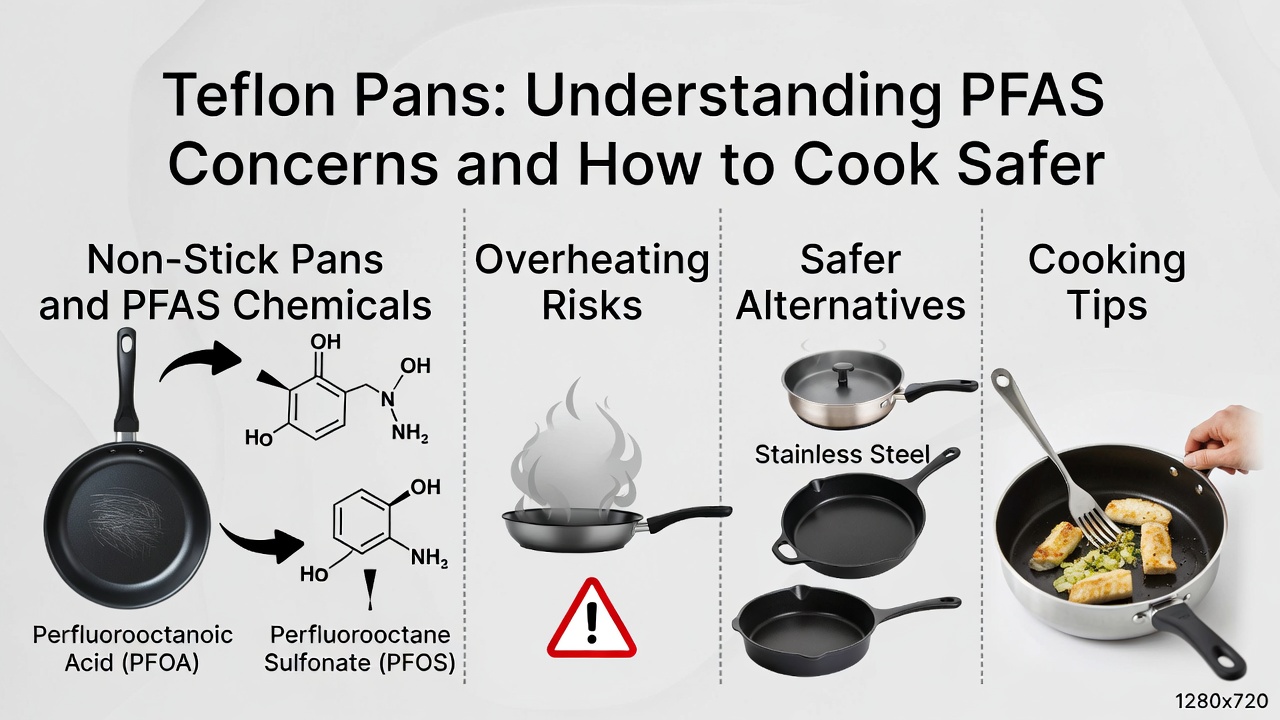
Teflon pans have revolutionized cooking with their non-stick surfaces, making meal preparation easier and cleanup a breeze. However, concerns about per- and polyfluoroalkyl substances (PFAS), often called “forever chemicals,” have raised questions about their safety. This article explores the historical issues with perfluorooctanoic acid (PFOA), ongoing debates around PFAS in modern non-stick coatings, overheating risks, and practical tips for safer use or replacement.
What Are Teflon Pans?
Teflon is a brand name for polytetrafluoroethylene (PTFE), a synthetic polymer used to create non-stick coatings on cookware. PTFE is part of the broader PFAS family, which includes thousands of chemicals known for their resistance to heat, water, and oil. These properties make Teflon ideal for pans, but they also contribute to environmental persistence and potential health risks. While Teflon itself refers specifically to DuPont’s (now Chemours’) product, the term is often used generically for similar non-stick cookware.
The History of PFOA and Its Phase-Out
PFOA, a type of PFAS, was historically used as a processing aid in manufacturing PTFE coatings for non-stick pans. Concerns about PFOA emerged in the early 2000s when studies linked it to health issues, including cancer, thyroid disease, and developmental problems in animals and humans. In response, the U.S. Environmental Protection Agency (EPA) initiated the PFOA Stewardship Program in 2006, leading major manufacturers to phase out PFOA by 2015. Today, most Teflon pans are labeled “PFOA-free,” but this doesn’t eliminate all PFAS from the equation, as PTFE itself is a PFAS compound. The phase-out was a significant step, driven by evidence of PFOA’s bioaccumulation in the body and environment. However, legacy contamination from pre-2015 products and ongoing use in some regions outside the U.S. remain issues.
Ongoing Concerns with PFAS in Non-Stick Coatings
Even without PFOA, PFAS concerns persist because PTFE and other fluoropolymers in non-stick pans are still classified as forever chemicals—they don’t break down easily and can accumulate in soil, water, and human tissues. Recent studies suggest that scratched or worn coatings may release PFAS into food, contributing to exposure alongside sources like packaging and water. Health risks associated with PFAS include immune system suppression, hormonal disruption, and increased cholesterol levels, though direct links from cookware alone are debated. Critics argue that while PFOA was replaced, shorter-chain PFAS alternatives may pose similar risks, and there’s limited regulation on cookware PFAS levels in the U.S. Proponents, including manufacturers, maintain that properly used modern Teflon is safe, with minimal migration of chemicals under normal conditions.
Risks of Overheating Teflon Pans
One of the most immediate dangers is overheating. When Teflon pans exceed 500°F (260°C), the PTFE coating can degrade, releasing toxic fumes that cause polymer fume fever, commonly known as “Teflon flu.” Symptoms include fever, chills, headache, and nausea, typically resolving within 48 hours but potentially more severe in sensitive individuals. These fumes are especially lethal to birds, serving as a warning sign for pet owners. Overheating often occurs when pans are preheated empty on high heat or left unattended. Additionally, damaged coatings from scratches can accelerate PFAS release even at lower temperatures.
Tips for Safe Use and When to Replace Worn Pans
If you choose to use Teflon pans, follow these guidelines to minimize risks:
- Stick to Low-to-Medium Heat: Never exceed medium heat, and avoid preheating empty pans. This prevents overheating and fume release.
- Use Gentle Utensils: Opt for wooden, silicone, or plastic tools to avoid scratching the coating. Metal utensils can damage the surface, increasing PFAS migration.
- Ensure Good Ventilation: Cook in a well-ventilated kitchen to disperse any potential fumes.
- Hand-Wash Carefully: Avoid abrasive scrubbers and dishwashers if possible, as they can wear down the coating faster.
- Monitor for Wear: Replace pans if the coating is scratched, flaking, or discolored. Continued use of damaged pans may contaminate food with PFAS and microplastics.
Experts recommend replacing non-stick pans every 2-5 years, depending on usage, to maintain safety.

Safer Alternatives to Teflon Pans
For those concerned about PFAS, consider switching to non-fluorinated options:
- Stainless Steel: Durable and PFAS-free, though it requires oil or butter for non-stick properties.
- Cast Iron: Naturally non-stick when seasoned, excellent for high-heat cooking.
- Ceramic-Coated Pans: Often marketed as PFAS-free, but verify claims as some may contain other chemicals.
These alternatives may require adjustment in cooking techniques but eliminate PFAS worries.
Conclusion
Teflon pans offer convenience, but understanding PFAS concerns—from the phased-out PFOA to lingering questions about forever chemicals—is crucial for informed choices. By using them safely and replacing when necessary, you can reduce risks. Ultimately, weighing the benefits against potential health and environmental impacts may lead many to explore PFAS-free alternatives for a safer kitchen.
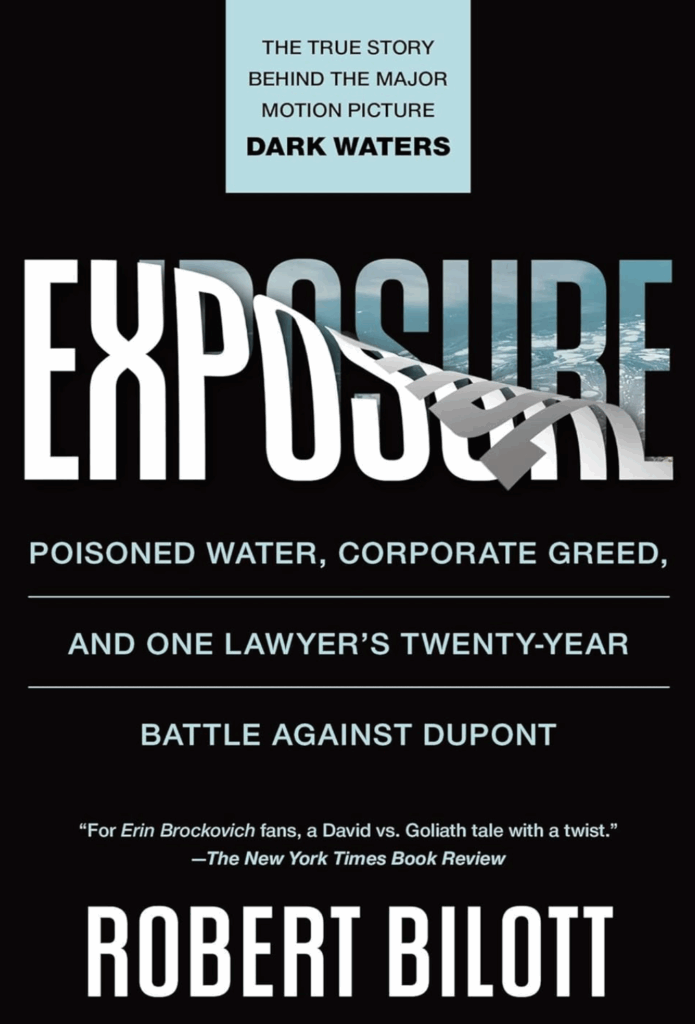
This is widely regarded as one of the best and most impactful books on the topic. It details the real-life story of attorney Robert Bilott’s decades-long fight against DuPont over PFOA (a key PFAS chemical used in Teflon production), which contaminated water supplies and affected communities. The book covers the health risks, corporate cover-ups, regulatory failures, and the broader implications of PFAS exposure—including links to non-stick cookware. It’s gripping, evidence-based, and inspired the film Dark Waters.
Highly praised for its readability and thorough documentation of how these “forever chemicals” became ubiquitous.
You can find it on Amazon here, click on picture:
Other Strong Options
- Poisoning the Well: How Forever Chemicals Contaminated America (recent release, around 2024–2025)
This book explores PFAS contamination across the U.S., including everyday sources like cookware, water, and products. It draws on investigative reporting from contaminated sites, highlighting corporate greed, military involvement, and community impacts. It’s a broader look at how PFAS (including those tied to Teflon) have affected nearly everyone, with a focus on ongoing risks and policy failures. - Forever Chemicals: Environmental, Economic, and Social Equity Concerns with PFAS in the Environment edited by David M. Kempisty and LeeAnn Racz (2021)
A more technical/academic resource covering PFAS science, persistence in the environment, health effects, detection, regulation, and remediation strategies. It includes discussions relevant to consumer products like non-stick pans and emphasizes equity issues in exposure. - Perfluoroalkyl Substances in the Environment: Theory, Practice, and Innovation edited by David M. Kempisty, Yun Xing, and LeeAnn Racz (2018)
Focuses on the chemistry, toxicology, historical use, and management of PFAS, with insights into their role in products like non-stick coatings.
Top Documentaries
The Devil We Know (2018)
Directed by Stephanie Soechtig, this investigative film exposes DuPont’s alleged decades-long cover-up of health hazards from PFOA (a key PFAS used in Teflon production). It centers on the Parkersburg, West Virginia, contamination case, personal stories from affected residents (including birth defects and cancers), and how PFAS ended up in nearly everyone’s blood. It’s widely praised for its evidence-based approach and is available on Netflix (as of recent listings).
Highly recommended as a foundational watch on the Teflon/PFAS saga.
Dark Waters (2019)
While technically a dramatized feature film (starring Mark Ruffalo as attorney Robert Bilott), it’s based directly on the true DuPont/PFOA contamination story and often discussed alongside documentaries for its accurate portrayal of PFAS pollution in drinking water, corporate deception, and legal battles. It’s gripping and has raised massive awareness. Available on Netflix in many regions.
GenX: The Saga of Forever Chemicals (ongoing/recent release, produced by Mark Ruffalo)
A groundbreaking documentary exposing the global PFAS crisis, including community fights, firefighting foam bans, and personal actions to combat contamination. It builds on earlier shorts like BURNED: Protecting the Protectors (focused on firefighters’ exposure) and dives into broader issues like GenX (a PFAS replacement) polluting water supplies. Check genxthefilm.org for availability and screenings.
Revealed: How to Poison a Planet (2024–2025, also known as “How to Poison a Planet”)
This film reveals never-before-seen sworn testimony from 3M scientists on PFAS dangers, behind-the-scenes access to major lawsuits (including the $12.5 billion 3M settlement), and human impacts in places like Australia (Wreck Bay community) and the U.S. (Minneapolis area). It highlights firefighting foam as a major contamination vector and calls it one of history’s biggest environmental disasters. Features Mark Ruffalo and legal teams; available on platforms like Stan (Australia) or check for streaming updates.
Everywhere & Forever: Blood. Water. And the Politics of PFAS (2025, FOX 9 documentary)
An investigative piece on how 3M withheld early research on PFAS, contaminated global water and blood supplies, and influenced regulations. It uses exclusive depositions and focuses on Minnesota impacts. Watchable on FOX LOCAL, FOX 9’s YouTube channel, or their site.
Switch to stainless steel pans today and ditch the hidden risks of PFAS forever chemicals lurking in non-stick coatings—click the picture below to grab a durable, high-quality stainless steel pan that lasts a lifetime without leaching toxins into your food.
These sleek, professional-grade pans heat evenly, handle high temperatures safely, and let you cook healthier meals with just a touch of oil, making cleanup effortless while protecting your family’s long-term health.
Click the image now to upgrade your kitchen to safer, more reliable cookware that’s trusted by chefs worldwide—no more worrying about scratched Teflon or toxic fumes!

 How to Build a Fully Organic Pantry on a Budget: Essentials for Beginners
 Burning candles and fumes from cooking is harmful for people with mild asthma
 Paper drinking straws may be harmful and may not be better for the environment than plastic versions
 Indicator of PFAS found in some — but not all — period products