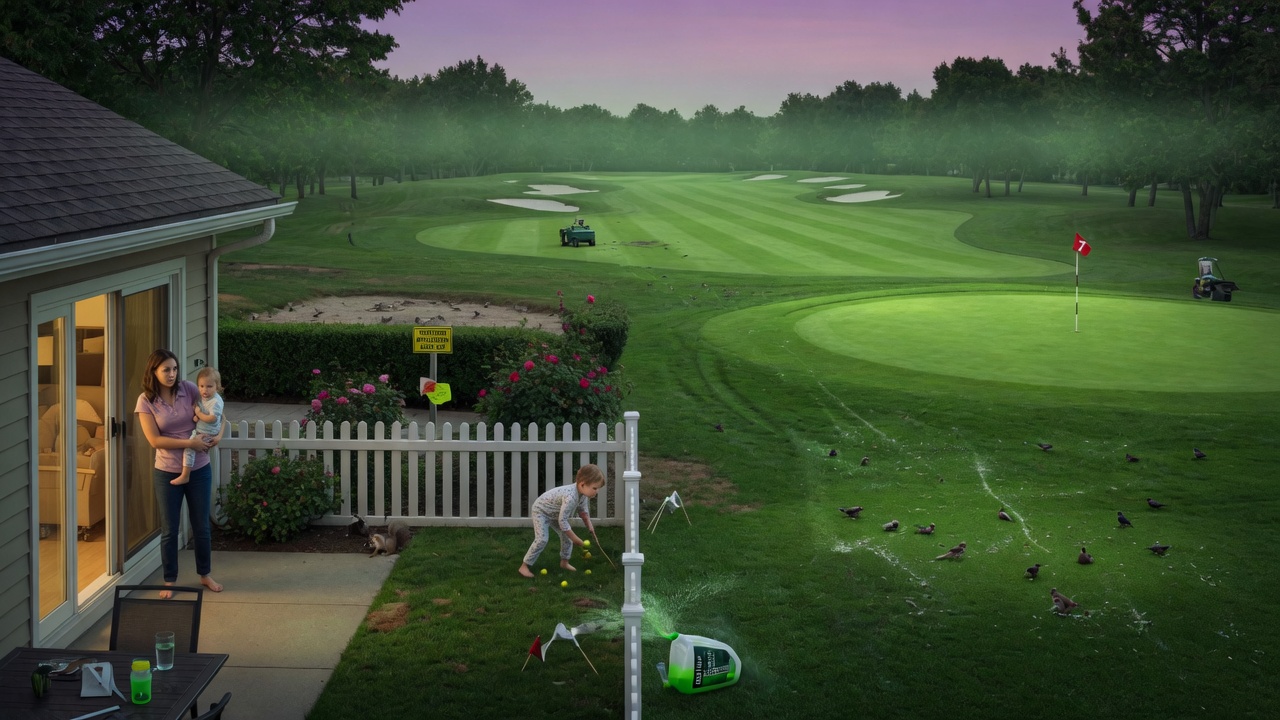
Living near a pristine golf course seems like an idyllic lifestyle choice for many homebuyers. Lush fairways, fresh air, and scenic views often command premium prices in real estate markets. However, emerging science reveals a darker reality hidden beneath that perfect turf. Heavy chemical applications create invisible threats that drift and leach into surrounding neighborhoods. Residents may unknowingly face elevated health risks from long-term exposure.
Golf courses in the United States apply pesticides, herbicides, and fungicides at rates far exceeding typical agricultural use. Studies indicate applications can reach up to 15 times higher than in European counterparts in some regions. These chemicals maintain the uniform green appearance demanded by players and clubs. Runoff, airborne drift, and groundwater contamination spread these toxins beyond course boundaries. Nearby homes often sit within the direct path of this chemical exposure.
A landmark 2025 study published in JAMA Network Open delivered alarming findings about neurological health. People living within one mile of a golf course faced 126% higher odds of developing Parkinson’s disease compared to those more than six miles away. Risk remained significantly elevated up to three miles, decreasing gradually with distance thereafter. Researchers linked this pattern to pesticide contamination of drinking water and air. Shared municipal water systems amplified the danger substantially.
Parkinson’s connection stems from neurotoxic properties of common golf course chemicals. Compounds like paraquat and others damage dopamine-producing neurons in the brain. Animal studies confirm these effects at low doses over time. Residents ingest or inhale trace amounts through everyday activities like drinking water or breathing outdoor air. This chronic exposure accumulates silently across years.
Cancer concerns for nearby residents build upon stronger evidence from golf course workers. A 1996 proportionate mortality study of deceased superintendents revealed elevated rates for multiple cancers. Brain cancer, non-Hodgkin’s lymphoma, prostate cancer, and large intestine cancer showed notably higher proportionate mortality ratios. These patterns mirror other pesticide-exposed occupational groups. While direct resident studies lag, the chemical overlap raises serious red flags.
Pesticide drift represents one primary exposure route for homeowners. Wind carries fine particles from sprayed fairways and greens into adjacent yards and homes. Children playing outdoors and families hosting backyard gatherings receive unintended doses. Indoor dust can accumulate residues tracked inside on shoes or clothing. This creates persistent low-level contact even after applications end.
Groundwater contamination poses perhaps the most insidious threat. Many golf courses overlie vulnerable aquifers that feed municipal wells. Pesticides leach through soil during heavy rains or routine irrigation. Vulnerable geology accelerates this process, nearly doubling Parkinson’s odds in affected water service areas. Private wells offer no guaranteed protection without proper testing and filtration. Once contaminated, water sources deliver daily exposure through drinking, cooking, and bathing.
Real estate decisions rarely factor in these hidden environmental costs. Luxury golf community marketing emphasizes beauty and recreation while downplaying maintenance chemistry. Homebuyers focus on amenities and property values rather than long-term health impacts. Distance from the nearest course edge provides misleading comfort when contamination travels farther. Informed buyers should investigate local water quality reports and course practices.
European approaches demonstrate safer alternatives exist for turf management. Stricter regulations limit pesticide volumes and types compared to lax U.S. standards. Some regions ban cosmetic applications entirely in public spaces. Hazard quotients measuring human health risk prove dramatically lower abroad. American courses could adopt similar integrated pest management without sacrificing playability entirely.
Vulnerable populations face disproportionate risks near golf courses. Pregnant women, developing children, and elderly residents exhibit greater sensitivity to neurotoxins and carcinogens. Early-life exposures may program lifelong health vulnerabilities according to emerging toxicology research. Families planning long-term stays should weigh these factors carefully against lifestyle appeal. Health consequences may manifest decades later.
Regulatory oversight of golf course chemicals remains insufficient in many areas. Reporting requirements vary by state and often lack transparency for nearby residents. Public notification of spraying schedules happens inconsistently or not at all. Without mandatory buffer zones or advanced application technologies, drift continues unchecked. Advocacy for stronger rules could protect communities effectively.
Water filtration emerges as a practical immediate defense for concerned residents. Reverse osmosis or certified carbon systems remove many pesticide residues effectively when properly maintained. Regular testing of tap water provides crucial baseline data about local risks. Home air filters and frequent cleaning reduce indoor dust accumulation from outdoor sources. These steps mitigate but do not eliminate exposure.
Property values near golf courses may reflect unaccounted health liabilities over time. As awareness grows about pesticide links to Parkinson’s and cancer, buyer preferences could shift dramatically. Insurance markets might eventually adjust premiums based on proximity to high-chemical-use sites. Forward-thinking developers could differentiate by adopting organic or low-input maintenance programs. Market forces may drive positive change eventually.
Scientific limitations in current research deserve acknowledgment alongside the concerning patterns. The JAMA study demonstrates strong association rather than definitive causation between proximity and disease. Direct measurements of pesticide levels in residents’ bodies or homes would strengthen evidence further. Confounding factors like lifestyle or socioeconomic variables require continued examination. More longitudinal studies tracking actual exposure would clarify risks conclusively.
Individual actions complement broader systemic solutions for reducing harms. Supporting courses transitioning to sustainable practices encourages industry-wide change. Voting for local policies limiting non-essential pesticide use protects community health. Educating neighbors about invisible threats builds collective awareness and pressure for transparency. Personal vigilance combined with advocacy yields the strongest protection.
The allure of golf course living persists despite mounting evidence of potential dangers. Perfectly manicured landscapes symbolize status and leisure in American culture. Yet that emerald perfection comes at an unseen biological cost for many residents. Balancing recreation benefits against chronic health tradeoffs demands honest assessment. Prospective buyers deserve full disclosure about chemical dependencies.
Future research will likely expand understanding of residential exposures near treated turf. Biomonitoring studies measuring pesticide metabolites in blood or urine of nearby residents could provide direct links. Cancer registry analyses focused on golf-adjacent neighborhoods might reveal patterns over longer periods. Integrating weather, application logs, and health data would paint clearer pictures. Science continues advancing toward definitive answers.
Communities near golf courses face a collective choice about acceptable risk levels. Prioritizing short-term aesthetics over long-term public health carries consequences for current and future generations. Sustainable turf alternatives, buffer plantings, and reduced chemical protocols offer viable paths forward. Informed residents can advocate effectively for protective measures. The green illusion need not remain deadly with proactive change.
These products help readers protect themselves from pesticide/herbicide drift, groundwater contamination, and chemical exposure.
Top 5 Recommended Products to Sell (High Relevance + Demand)
- Reverse Osmosis (RO) Water Filtration Systems (Best Overall Seller)
- Top picks: iSpring RCC7AK (6-stage with remineralization), AquaTru Countertop RO, Waterdrop tankless models.
- Search terms: “reverse osmosis pesticides”, “golf course water filter”.
- High-Capacity Pitcher Filters or Under-Sink Filters Specialized for Pesticides
- Top picks: Epic Pure Pitcher Filters (explicitly markets pesticide/industrial pollutant removal), LifeStraw Home Dispenser, Aquasana Claryum.
- Why it fits: Affordable entry point for readers worried about drinking water near golf courses. Many explicitly list pesticide/herbicide reduction.
- Profit potential: Lower price point ($30–$80), fast-moving consumables (replacement filters), easy to bundle. Great for beginners.
- HEPA Air Purifiers with Activated Carbon for VOCs & Pesticide Drift
- Top picks: Austin Air HealthMate Plus (excellent for VOCs/chemicals), Coway Airmega, LEVOIT or PuroAir models with strong carbon beds.
- Why it fits: Perfect for airborne pesticide drift mentioned in the article. Activated carbon targets gases and volatile chemicals from turf applications.
- Home Water Testing Kits
- Top picks: Tap Score Advanced (lab-tested, 100+ parameters including pesticides), Varify 17-in-1 strips, Safe Home kits.
- Whole House Water Filters or Garden Hose Filters
- Top picks: Whole-house systems (e.g., A.O. Smith), garden hose filters that remove chlorine/pesticides for lawn/garden use.
- Why it fits: Protects against broader exposure (bathing, irrigation runoff) for people living near courses.
 Chocolate Not Equal To Beneficial Cocoa
 Lead Exposure Changes Gut Microbiota, Increases Chance For Obesity
 Diabetic foot amputations avoided with silver nanoparticles